What Is a CRM and How Does It Work?
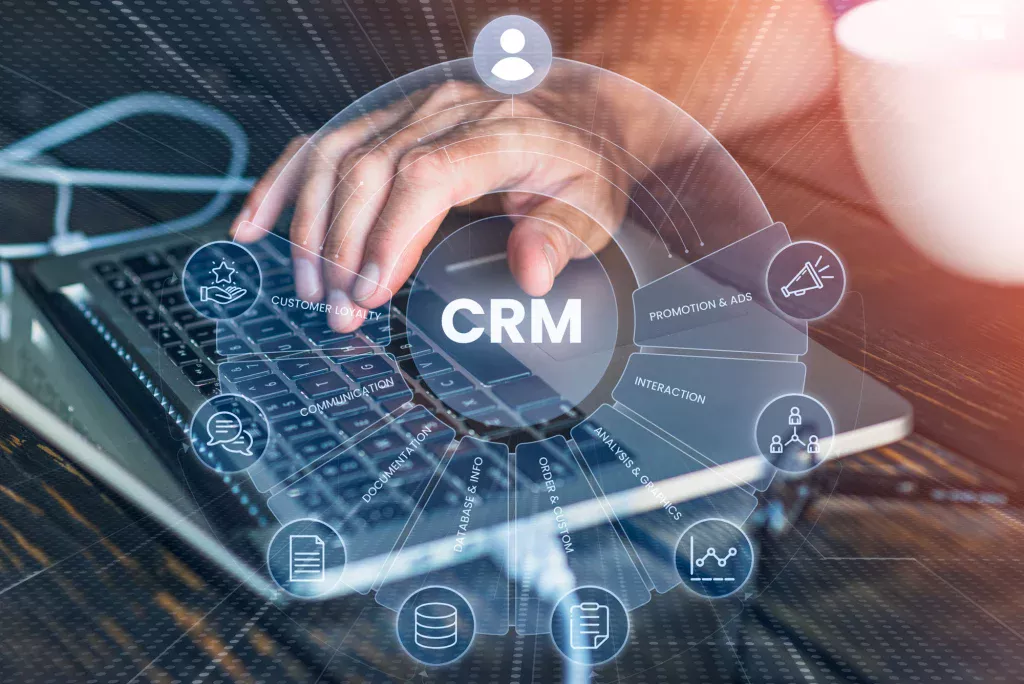
No more, no less full-service guide for modern businesses.
Introduction
From the perspective of business in your industry with today’s digital age environment, every customer interaction becomes an opportunity in the company’s longer-run reputation, revenue potential as well as in a business advantage. Whether business processes dozens or thousands of conversations between humans and machines, the ability to successfully handle them often determines if the company grows (and if so, what opportunities it will be losing).
CRM systems are the only answer to this question.
What Is a CRM?
A CRM (Customer Relationship Management system) is a centralized business platform that brings order to customer data, creates an efficient structure for sales processes, automates repetitive tasks and makes it efficient for enterprises to provide standardized personalized service at scale. More importantly, a CRM ensures the decisions leaders make from data instead of assumption.
CRM and Business Purpose (Peter Drucker Reference)
The management theorist Peter Drucker — widely recognized as the father of modern management, a professor at Claremont Graduate University and an adviser to major corporates — famously states:
“The purpose of business is to create and keep a customer.”
And CRM is the tool for businesses so that we can get this to work accurately so that the business will also help meet their goals.
Key Objectives, Business Value, Competitive Advantage
Centralized Customer Data: The Only Solution
In multiple companies, information resides in dozens of rooms — Excel files; notebooks; messenger chats; shared folders; personal devices. However, once the business begins to grow, this fragmentation leads to confusion, delays and loss of business opportunities.
A CRM consolidates all customer data in one profile:
contact details.
call logs and recordings.
email history.
website interactions.
marketing touchpoints.
invoices and proposals.
deal status and responsible manager.
and personal preferences and notes.
Why it matters
With centralized data:
the team has a better collaboration the In these days, we achieve this to facilitate better coordination.
communication are consistent.
customers never need to repeat themselves again you know.
managers receive a clear picture of all ongoing work that’s in development work.
Data becomes an asset for operations instead of a liability.
Creating a Framework for Sales for Predictability and Scaling
Sales teams tend to trust intuition over style, and structure over structure. But with an unclear, visual pipeline, managers have a hard time knowing:
where deals get stuck.
How many opportunities they are opening up.
to focus your business and choose which leads are worth prioritizing.
which money you expect to generate next month.
A CRM creates a consistent sales funnel:
New Lead.
Qualification.
Needs Analysis.
Offer / Proposal.
Negotiation.
Closed Won / Closed Lost.
How CRM improves sales performance
Demonstrates how each deal currently looks.
Helps identify where bottlenecks are and correct process weaknesses.
Allows for training to be grounded in real-world performance data.
Faster and accurate revenue forecasting.
Sales becomes something more than guesswork.
Automation: Making Manual Work Less Expensive and Eliminating Human Error
Automation is one of the most transformative features of CRM technology. Rather than depending on memory or manual entries, the CRM does things automatically:
follow-up reminders.
task creation.
email sequences.
assigning leads to managers.
status updates.
customer segmentation.
onboarding workflows.
That, in turn, saves hours a week and reduces errors dramatically.
Bill Gates – co-founder of Microsoft, ex-CEO and Chairman of Microsoft and one of the most influential figures in the tech industry – also realized a universal truth about business effectiveness:
“Automation applied to an efficient operation will magnify the efficiency… Automation applied to an inefficient operation will magnify the inefficiency.”
CRM systems do justice to this: they both amplify good processes, and undermine bad ones.
Timely and Regular Communication Is the Holy Grail to Boost Conversion Rate
The majority of lost business isn’t lost because customers turn down an offer — it’s lost because businesses don’t follow them up.
CRM significantly increases conversion by providing:
no customer is missed,
timely communication of every lead,
and an automatic generation of personalized messages.
the sales team knows exactly when to reach out.
Why conversions improve
Positive communication fosters trust.
Customers feel taken care of.
Sales reps stay organized.
Automation covers routine interactions.
According to a Gartner, HubSpot, and Nucleus Research study, a typical increase of 15–30% in conversion is related to the CRM adoption.
It Will Enhance Service and Customer Support
Customers are seeking the speed, clarity and a more personalized approach. A CRM allows service teams to offer this to service teams by displaying a full picture of a customer at a glance:
previous interactions.
past issues or complaints.
recorded calls.
purchase history.
internal notes.
communication preferences.
Effect on customer satisfaction
reduced handling times.
smoother issue resolution.
reliable service regardless of the staff changes.
higher retention and loyalty.
CRM makes service teams into well-informed, responsive problem-solvers with CRM.
Analytics and Forecasting: Decisions from Data Turns Into Decision-Making on CRM
CRM transforms service teams into a system-oriented and efficient system with evidence on demand. Today’s CRM offers powerful dashboards and analytics tools that enable leaders to view performance without reading through spreadsheets.
CRM analytics can reveal:
conversion rate by funnel stage.
which marketing channels deliver the best leads.
forecasted revenue.
sales team productivity.
customer lifetime value.
operational bottlenecks.
Why this is crucial
Having accurate data allows better decisions on:
budgets.
hiring.
marketing strategy.
sales training.
expansion opportunities.
Companies that rely on CRM-driven analytics grow far faster as they evade blind spots and act earlier.
How Does a CRM Work? A Step-by-Step Explanation
Data Collection Through All Connected Touchpoints
A CRM connects to:
websites and forms.
chat widgets.
email platforms.
PBX and telephony systems.
SMS and WhatsApp.
social media.
landing pages.
accounting tools.
The customer profile is automatically updated with every interaction. No manual input is needed.
Lead Capture and Qualification
When a new lead appears, the CRM:
builds or updates the contact record.
assigns the lead to a salesperson.
triggers follow-up tasks.
assesses lead quality based on rules or scoring.
This guarantees rapid reaction times — among the best indicators of closing a deal.
Within the Pipeline: Deal Management
The CRM monitors as communication unfolds:
emails.
calls.
notes.
tasks.
proposals.
changes in status.
Managers can immediately see at a glance how many deals are active, which ones are in jeopardy, or which need addressing immediately.
Automation of Workflows for Predictable Operations
CRMs also automate entire sequences like:
welcome messages.
nurturing campaigns.
reactivation of cold leads.
follow-up reminders.
internal notifications.
task creation based on customer behavior.
Automation removes guesswork and keeps deals on track.
Real-Time Reporting and Pipeline Visibility
Managers get dashboards that display:
sales progress.
lead generation trends.
employee performance rankings.
revenue forecasts.
marketing attribution.
customer churn risks.
This transparency allows companies to move confidently and with agility.
Types of CRM Systems
Operational CRM. Streamlines processes for sales, marketing, and customer support for your business on a daily basis.
Analytical CRM. Offers in-depth data analysis, segmentation, forecasting, and customer insights.
Collaborative (Communication) CRM. Uses one interface to manage all communication channels.
Industry-Specific CRM. Custom solutions applicable to real estate, healthcare, finance, logistics, retail, hospitality, and elsewhere.
Essential CRM Features (Extended List)
Lead and Contact Management.
Sales Pipeline Visualization.
Task and Workflow Automation.
Email Marketing Tools.
SMS and Omnichannel Messaging.
Connectivity with Phone Systems (PBX/VoIP).
Ticketing and Customer Support.
Invoicing and Payment Tools.
Role-Based Access.
Mobile CRM.
Document Templates.
Analytics Dashboards.
Marketing Attribution.
Customer Segmentation.
Signs That Your Business Needs a CRM Today
✔ You miss out on leads because there isn’t follow-up.
✔ Customer data is spread across many tools.
✔ You cannot accurately estimate revenue.
✔ Marketing generates leads, but sales aren’t known.
✔ Customer service varies widely enough.
✔ Business growth increases chaos instead of order.
If any statements feel familiar, a CRM is now no longer a choice, it is an imperative.
The Core Principle: CRM Is About Process, Not Just Software
A CRM does not fix a broken sales process – but it magnifies a good one. After processes are optimized, the CRM:
accelerates them.
automates them.
scales them.
defends the business from operational failings.
It emerges as the foundation of sustainable and predictable growth.
Conclusion
A CRM is more than a digital address book. It’s a central nervous system of modern business — integrating your sales, marketing, support, analytics and communication functions into one structured ecosystem.
And for companies that leverage CRM technology, the advantage stems from their clarity, consistency and data-informed approach. They replace what drags them down with what adds value.
Transforming communication into a consistent structured data set and defined data into measurable results, a CRM becomes one of the most valuable strategic tools any business can use.